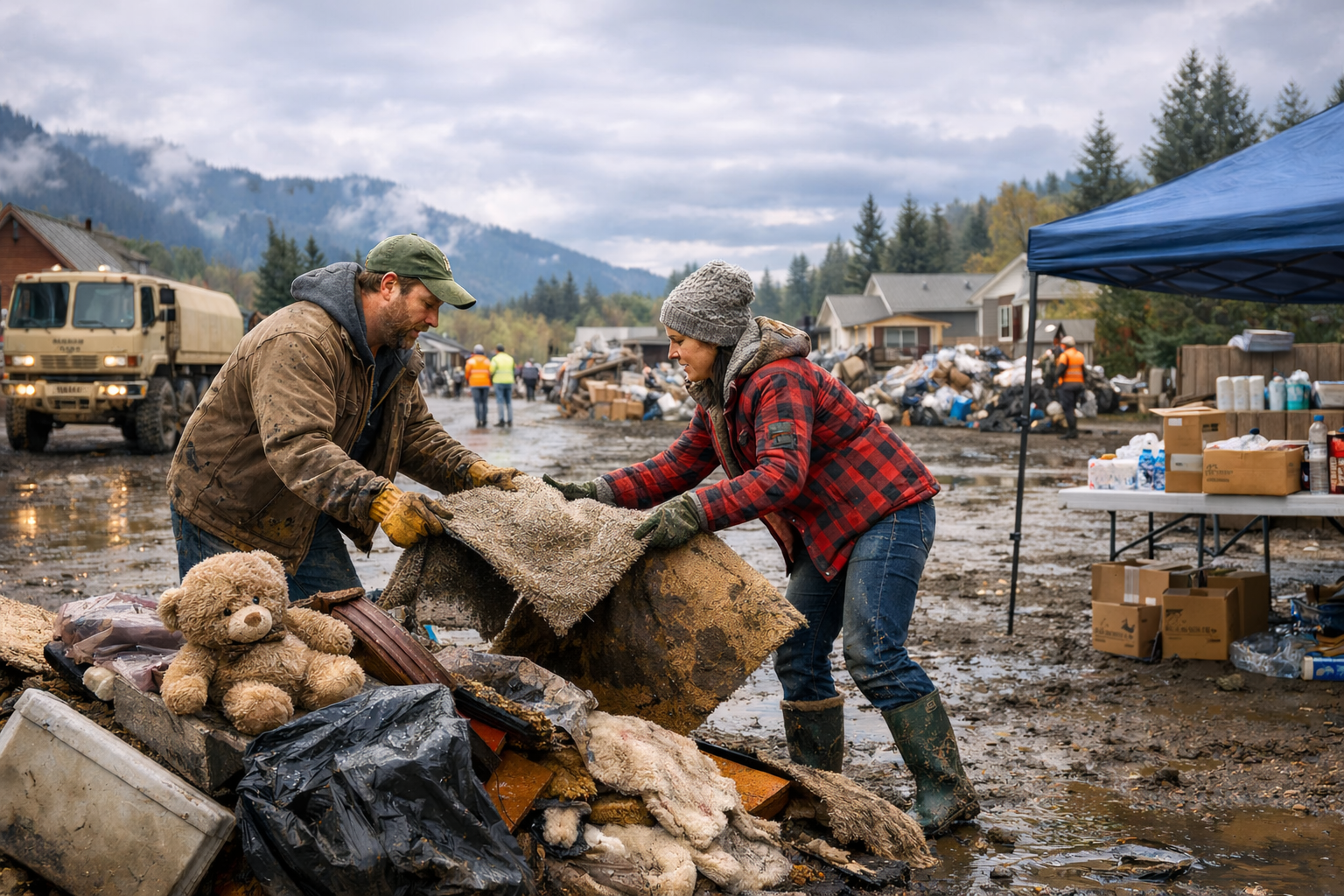
When floodwaters recede, the hardest part often begins: documentation, cleanup, temporary housing, insurance, and navigating local/state/federal assistance pathways. For Western Washington’s December 2025 flooding, several steps are consistently recommended by emergency management organizations and state leaders.
Step 1: Safety first—avoid secondary hazards
Even after rain eases, hazards remain:
-
Standing water can conceal washed-out roads and fast currents.
-
Saturated slopes can fail days later.
-
Downed power lines and damaged utilities can create life-threatening risks.
This event included fatal risk-taking outcomes; local reporting emphasized the danger of driving into flooded roadways and the importance of heeding closures. People.com
Step 2: Document damage immediately and thoroughly
If you are affected:
-
Photograph and video all impacted areas before cleanup, if it is safe.
-
Save receipts for emergency repairs, lodging, fuel, supplies, and cleanup materials.
-
Write down dates/times of impacts, evacuations, and interactions with officials.
This documentation becomes critical for insurance claims, state assistance, and potential FEMA-related programs if expanded declarations occur.
Step 3: Report impacts through official county/state channels
In many disasters, aggregated local reporting helps determine eligibility and scope for additional resources. FOX 13 Seattle noted that residents in multiple counties were being asked to report flood impacts as officials assess damages and the potential for broader federal assistance. FOX 13 Seattle
Step 4: Track state and federal assistance status
Two authoritative places to monitor:
-
Washington Governor’s office for proclamations and activated aid programs (including the announced $3.5 million support across 14 counties). Washington Governor’s Office
-
FEMA’s Washington incident listings, including the emergency listing that began December 9, 2025 and continues. FEMA
As declarations evolve, assistance types can change (temporary housing, individual assistance, public assistance, hazard mitigation). Until a specific program is confirmed for your area, avoid relying on rumors and focus on official announcements.
Step 5: Expect transportation disruptions to influence recovery
Flood recovery is slower when:
-
primary routes remain closed,
-
detours are long or unstable,
-
supply chains and contractors can’t reach affected areas efficiently.
King County’s road closure tools and storm updates are practical sources for “day-to-day reality” during recovery. King County+1
For longer disruptions, the US-2 Stevens Pass closure timeline reported by Washington State Standard is an example of how infrastructure damage can become a months-long constraint. Washington State Standard
How community organizations can help effectively
For Rotary clubs, nonprofits, and community networks, the most effective support usually falls into five categories:
-
Damage reporting and navigation support: help residents understand how to report impacts and keep documentation organized. FOX 13 Seattle
-
Cleanup logistics: volunteer coordination, debris removal support, tool lending, supply drives.
-
Short-term relief funding: flexible, rapid microgrants for lodging, food replacement, fuel, cleanup supplies—especially for those waiting on insurance timelines.
-
Case management partnerships: align with county emergency management, local food banks, and established relief organizations to avoid duplicative or misdirected aid.
-
Transparent public updates: publish what’s been raised, where it went, and what the next priority needs are.
Leave a Reply